Thursday, March 2, 2017

Ashes, ashes, we all fall down: A Devotional for the Beginning of Lent ~ Genesis 18:16-33


https://holyfamilychurch.net/pictures/2015/7/Ash-Wednesday-cross.gif
16 Then the men set out from there, and they looked towards Sodom; and Abraham went with them to set them on their way. 17The Lord said, ‘Shall I hide from Abraham what I am about to do, 18seeing that Abraham shall become a great and mighty nation, and all the nations of the earth shall be blessed in him?* 19No, for I have chosen* him, that he may charge his children and his household after him to keep the way of the Lord by doing righteousness and justice; so that the Lord may bring about for Abraham what he has promised him.’ 20Then the Lord said, ‘How great is the outcry against Sodom and Gomorrah and how very grave their sin! 21I must go down and see whether they have done altogether according to the outcry that has come to me; and if not, I will know.’22 So the men turned from there, and went towards Sodom, while Abraham remained standing before the Lord.* 23Then Abraham came near and said, ‘Will you indeed sweep away the righteous with the wicked? 24Suppose there are fifty righteous within the city; will you then sweep away the place and not forgive it for the fifty righteous who are in it? 25Far be it from you to do such a thing, to slay the righteous with the wicked, so that the righteous fare as the wicked! Far be that from you! Shall not the Judge of all the earth do what is just?’ 26And the Lord said, ‘If I find at Sodom fifty righteous in the city, I will forgive the whole place for their sake.’ 27Abraham answered, ‘Let me take it upon myself to speak to the Lord, I who am but dust and ashes. 28Suppose five of the fifty righteous are lacking? Will you destroy the whole city for lack of five?’ And he said, ‘I will not destroy it if I find forty-five there.’ 29Again he spoke to him, ‘Suppose forty are found there.’ He answered, ‘For the sake of forty I will not do it.’ 30Then he said, ‘Oh do not let the Lord be angry if I speak. Suppose thirty are found there.’ He answered, ‘I will not do it, if I find thirty there.’ 31He said, ‘Let me take it upon myself to speak to the Lord. Suppose twenty are found there.’ He answered, ‘For the sake of twenty I will not destroy it.’ 32Then he said, ‘Oh do not let the Lord be angry if I speak just once more. Suppose ten are found there.’ He answered, ‘For the sake of ten I will not destroy it.’ 33And the Lord went his way, when he had finished speaking to Abraham; and Abraham returned to his place. 


What does it mean to pray for our own city and how does Abraham teach us about prayer? 

1.    Ashes, ashes, we all fall down.

“Ring around the rosie a pocket full of posies. Ashes, ashes, we all fall down!” That’s the first thing we learn when we pray for Sodom – we all fall down. My oldest daughter Emma was participating in a semester abroad program with Westmont in San Francisco – and decided to do her internship at the state run hospital as a chaplain’s assistant. Her first day was Ash Wed and she called me at the end of the day having imposed ashes on hundreds of hurting, sick people. With deep emotion quaking in her voice she said to me, “Dad, I don’t know how to describe it. It was both beautiful and terrible.” She’s right. We are beautiful and broken creatures.  That’s what we confess to one another on Ash Wednesday. That’s the beautiful and terrible truth that we learn in prayer.  We are all ashes. Ashes that sing, ashes with a purpose. We are ashes that love our children, ashes that hurt one another, ashes that brag about ourselves and ashes that sacrifice to help others.  In our text from Genesis and in the midst of prayer, Abraham in vs. 27 says, “Let me take it upon myself to speak to the Lord, I who am but dust and ashes.” 

In the midst of his prayer, Abraham recognizes the beautiful and terrible truth that the fate of Sodom is connected to his own fate. It’s about the fate of his family and friends – because we all sin, we are all mortal, broken, beautiful, wicked, good and created by God, we all fall down. I didn’t grow up in a tradition that practiced Ash Wednesday. When I first encountered it I was a bit skeptical. Who would want to do that? And yet I have discovered from others and myself that I am often eager to wear them. Why? Because as painful as it is – we deeply want to know the truth about ourselves, we deeply wish to confess all who we are, all that we’ve done. In the mini-series True Detective, Matthew McConaughey’s character, a cerebral yet broken detective says, “Look – everybody knows there’s something wrong with them. They just don’t know what it is. Everybody wants confession. Everybody wants some cathartic narrative for it. The guilty especially. And everybody’s guilty.”

We pray for others because we recognize our own frailty, that everybody’s guilty, and that we all fall down. To wrestle with the fate of the city, the fate of the unrighteous, is always to wrestle with ourselves, to confess our own sinfulness. When we wear ashes we remember like Abraham that at our most fundamental level there is no us and them. And like Abraham we remember that I am, you are, she is, but dust and ashes.

         But Abraham also reminds us that our frailty does not necessitate 
         our silence. It does not mean that we may say nothing to a holy God. 
         In fact, we learn the exact opposite. We are ashes that speak to God.

2.    Stop groveling and start arguing.

Yet, even though we may be ash, God is not looking for “yes” men. God is looking is for true companions not silent partners. God doesn’t hide his plans from Abraham, doesn’t smite him for arguing. In fact, Genesis reveals a God who relishes in haggling and struggle. And Abraham is not shy. He says to God, “25Far be it from you to do such a thing, to slay the righteous with the wicked, so that the righteous fare as the wicked! Far be that from you! Shall not the Judge of all the earth do what is just?’” We find this same spirit in the New Testament. In Luke 18, Jesus also counsels such relentless, pressuring of God. We should remember that the God of Abraham, Isaac and Jacob chose the Israelites as his people, and “Israel” literally means, “God wrestler.” Prayer in its highest form and grandest success assumes the attitude of a wrestler with God.

Sojourner Truth, a leader in both abolitionism and the woman’s suffrage movement, had no problem praying what was on her mind. When her son fell ill she prayed, “Oh, God, you know how much I am distressed, for I have told you again and again. Now, God, help me get my son. If you were in trouble, as I am, and I could help you, as you can me, think I wouldn’t do it? Yes, God, you know I would do it.”
Jesus’s own teaching on persistence in prayer ends with a question of faith – “And yet, when the Son of Man comes, will he find faith on the earth?” Faith in prayer isn’t so much about believing in the impossible as it is arguing with God about the possible. 

Why? Why does God invite argument and struggle, only to yield? Simply this - because in arguing with God about God’s own mercy we in fact take on God’s own qualities of passion and grace. When we argue with God about God’s mercy, we become more merciful, we become ashes that love.

Monday, February 27, 2017

The Nevertheless Gang ~ 2 Samuel 5:1-7


5 All the tribes of Israel came to David at Hebron and said, “We are your own flesh and blood. 2 In the past, while Saul was king over us, you were the one who led Israel on their military campaigns. And the Lord said to you, ‘You will shepherd my people Israel, and you will become their ruler.’”3 When all the elders of Israel had come to King David at Hebron, the king made a covenant with them at Hebron before the Lord, and they anointed David king over Israel.4 David was thirty years old when he became king, and he reigned forty years. 5 In Hebron he reigned over Judah seven years and six months, and in Jerusalem he reigned over all Israel and Judah thirty-three years.6 The king and his men marched to Jerusalem to attack the Jebusites, who lived there. The Jebusites said to David, “You will not get in here; even the blind and the lame can ward you off.” They thought, “David cannot get in here.” 7 Nevertheless, David captured the fortress of Zion—which is the City of David. ~ 2 Samuel 5:1-7


http://freebeacon.com/wp-content/uploads/2014/11/David_SM_Maggiore.jpg


Have you ever heard of the Anglo-Zanzibar War? Fought between the United Kingdom and Zanzibar on 27 August 1896, the conflict lasted approximately 40 minutes, making it the shortest war in history. Our passage of scripture may give it a run for its money – at least in its brevity of description – it’s poignant “nevertheless” – a war in only seven words: “Nevertheless, David captured the fortress of Zion.” How can we inhabit this tenacity? How can we craft a “nevertheless” vision for our church? What will make us a part of the “nevertheless” gang? 


          1.    Follow the leader (I’m not David. You’re not David. Jesus is David)


POINT: To follow the leader means that the church isn’t on hold without a senior pastor or in limbo because it doesn’t know what to do – the leader hasn’t left, he’s active and the mission is the same!


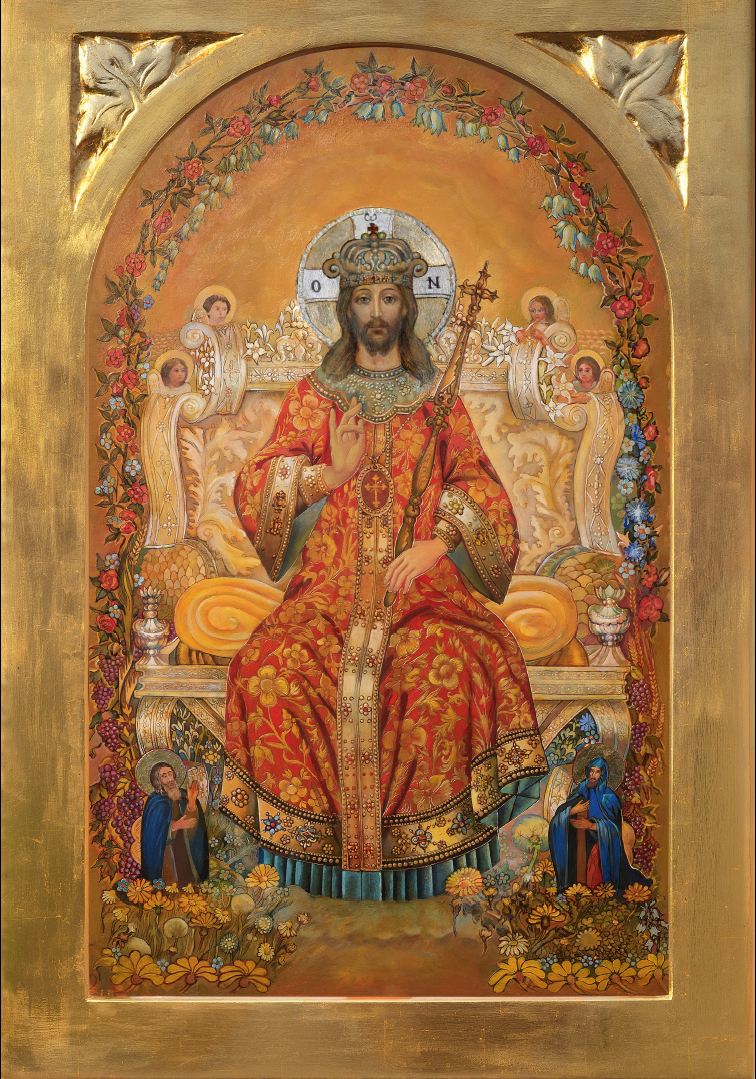
David, of course, in the scriptures is more than David. His name and activity were connected by God to the promised king whose kingdom would never end” (2 Samuel 7:12-17). This promise became the very premise behind the Israelites waiting for a “messiah” and when you hear that word always hear “king.” This is why Jesus was referred to, right off the bat, as the “son of David” (cf. Matthew 1, Luke 3, Romans 1:3). He is the one who is our “shepherd” who will declare God’s kingdom come at the age of “thirty” (2 Sam. 1:4).  Friends, it’s true that we’re missing a permanent senior pastor that we dearly loved. And though Don hasn’t died and in no way resembles Saul - like Saul – he’s gone. His leadership has ended. But that doesn’t leave us leaderless. In fact, our passage clues us into a different perspective. In vs. 2 the Israelites confess that even “while Saul was king,” it was “you” [David] who had been leading, helping and guiding (vs. 2). The Hebrew is emphatic – literally “you, it was you.” So Jesus has been the leader all along. Jesus was the leader while Don was here and Jesus is the leader now that Pastor Mike has joined us! 

Image result for Jesus as King


To follow Jesus as the leader is to know his words and act on them. In our story there are a number of interesting people who relate to David – the Israelites and elders who make a covenant with him, the Jebusites and their “blind and lame” who supposedly can keep David out, and David’s own men. It’s interesting that David advances toward and conquers the city only with “his men,” referring to his band of loyal mercenary soldiers who owe loyalty only to him, and not the Israelites. The church doesn’t need people fiercely loyal to itself. When that happens we will try to protect ourselves, get wrapped up in petty concerns, be incapable of hearing any criticism or critique. Friends, what MCC needs if we wish to be healthy, if we wish to conquer, is to be loyal only to him.


          2.    Know the objective – the city.


POINT: The objective is not about better attendance, tastier coffee, a more fulfilling life, though all those things may be good. The objective is about a city transformed Jesus’ way.


The objective has always been the city. And nothing – not Jebusites or taunts or rival political allegiances, nothing will keep God from accomplishing its conquering. But what does that conquering of the city look like? Three things seem important: 

Image result for ancient jerusalem city


First, notice that it’s a bloodless even fightless confrontation – a simple nevertheless. One reason for so little detail about this battle and the two battles with the Philistines just after relates to the fact that they were considered God’s battles. God’s battles are always “nevertheless.” The danger for the church is that we arm ourselves wrongly because we forget whose army we are. We don’t arm ourselves with guns but shovels, not weapons but medicine, not hatred but love.


Second, a conquered and restored city has always been the spirit-filled job description of the messiah and his followers. This is captured in Isaiah’s prophecy which Jesus himself quotes to launch his own ministry (Isaiah 61). Jesus stated, that he was the one whom Isaiah wrote about who would bring good news to the poor, the oppressed, the brokenhearted, etc. (Isaiah 61:1-2; Luke 4:16-21).  It is interesting to note, however, that the prophecy of Isaiah also goes on to say that those who received that good news would have their own job description to “repair the ruined cities, the devastations of many generations” (Isaiah 61:3b-4). Thus the messianic vision was that a people would cooperate with, and demonstrate, his rule and reign by repairing “ruined cities”.


Third, when we understand that Jesus is our David we recognize that Jesus doesn’t simply conquer cities but that he does so through broken and restored people. Just as David wasn’t thwarted by the blind and the lame Jesus will not be either but for a different reason. The Jebusites taunt David with the blind or lame because they believe that their city is so well-fortified that it remains impregnable. Jesus, however, is NOT thwarted by the blind and the lame because he actually uses them to conquer cities. Jesus wins by converting the broken and enemies to friends – by taking the useless, the estranged, the people who are the butt of the joke, the subject of taunts, and making them useful, connected and whole. Do you feel inadequate? Then you are that much closer to actually being a part of Jesus’ conquering force. Jesus conquers by turning enemies into friends.


I have a friend who is a Christian activist who works on homelessness issues – helping people who are homeless find justice and peace by being housed with supportive services. In the city he works he was often opposed by a neighborhood business organization that simply wanted the homeless moved out of the area. My friend sought common ground where no one else could and went to that group with the idea that they could be friends rather than enemies. He told them he would help them get their wish to move those who were homeless out of the area. They agreed and the covenant has yielded incredible results, housing 17 people. My friend understands what it means to follow Jesus in order to conquer the city. It means loving enemies until they actually join your side! As we seek to gain a vision of the “nevertheless” let us never shy away from the missional goal of the city to make our enemies into friends.


          3.    Be a “we.” 


POINT: Our ability to follow Jesus, our success in joining his mission in transforming our city, will have everything to do with our commitment to be a “we,” to be a tribe for him. 

https://mykelmykel.files.wordpress.com/2012/10/screen-shot-2012-10-24-at-10-49-20-am.png


In vs. 1 this story begins with: “All the tribes of Israel came to David at Hebron and said, “We are your own flesh and blood.” They turned their back on all of their differences, the previous civil war between the northern and southern kingdoms and focused on the things they had in common, the things that could unite them.  This is a covenantal bond of solidarity.


The people of God are never at their best when their primary concern is to “be right”, to “be relevant”, or to “be powerful.” We should never underestimate the desire of the enemy to use such things to sow discord and dissension. I constantly tell engaged couples to always remember that “being right is overrated.” Being right will not bring marital harmony.


But if Montecito Covenant becomes a “we” which covenants with Jesus Christ – nothing will be capable of separating us. The Evangelical Covenant Church has staked its identity on the fact that unity itself a critical, theological idea of great importance – made to sit alongside things like the trinity, the incarnation, the deity of Jesus. In John 17, Jesus doesn’t pray that they would know everything like us, or even do miracles like us, but that they would be one like us. Are we one?

But there is another way in which unity is expressed in this passage. The formula of “flesh and bone” is not so much a statement about biological kinship as the recognition that the two parties stand together in both strength (bone) and in weakness (flesh). That’s what unity is – not simply some tacit agreement to not talk about certain things but to deeply love and support one another in sickness and in health, in poverty and in wealth, and while marriage is a nice image I would like to focus elsewhere – on team sports and what many have called the most successful football play of all time.

http://cbsnews3.cbsistatic.com/hub/i/r/2013/10/25/cc51eda5-4782-11e3-a5af-047d7b15b92e/thumbnail/1200x630/8afd6b9fc75ae9355709c6330ae70ac9/footballclose.jpg

The teammates of Keith Orr, a student at Olivet Middle School in Michigan with some learning disabilities (and who is a hugger), schemed to do something wonderful for him — without the knowledge of their coach or their parents.


In one game in October of 2013, the team enacted their two-play plan at a home game. Play 1: get as close to the end zone as possible without scoring. Play 2: give the ball to Orr and protect him as much as possible in a rush to a touchdown. 

To watch the video click on the following link: 

https://www.youtube.com/watch?v=0Ejh_hb15Fc&t=114s

 That’s a good story. And the moment that’s most profound is when wide receiver Justice Miller shares an important lesson about what it means to be a “we.” 


He said “…he’s never been cool or popular. He went from being pretty much a nobody, to making everyone’s day.” Did you catch that? He thought that he was doing something nice for someone and didn’t realize until it happened how much he himself would be blessed. How much he needed Keith Orr.


Justice Miller said he learned to look out for the feelings of others more than just he and his friends. “I kind of went from being somebody [who] mostly cared about myself and my friends to caring about everyone and trying to make everyone’s day and everyone’s life.”


Friends, that’s our parable for what the “we” should mean in our midst. How we must be together. It means that we need each other to find our place, to find our way. It reminds us that we all have need and that we all have something to offer to fill that need. And if we do it. Then despite what problems we face, nevertheless, we’ll conquer.