Tuesday, January 22, 2013

Go Together, Be Prepared, Act Out: Jesus' Model for Flash Mob Ministry - Mark 11:1-11


 Dont' Read Further BUT Watch This:  http://www.youtube.com/watch?v=SXh7JR9oKVE

Flash mobs like this are exhilarating. They grab out attention because they are dramatic moments where the mundane meets the magnificent. They’re Handel’s Messiah in a Food Court where cheap food and boredom meet surprise, bafflement, even joy. When we experience them they feel sudden, surprising, they knock us into a new awareness, a new time, but we know that they don’t just happen – that they are well-planned and prepared requiring creativity, scheduling, practice and, more practice. But when done well – they create a context for spontaneous wonder that leave us feeling breathless. Today, I would like to introduce you to Jesus’ own flash mob, his triumphal entry, where he dramatically portrays himself as king.  I pray that his creative bit of street theater invites you to share in the wonder, participate in the joy, and inspires you to plan and demonstrate his kingship in surprising ways. Friends, welcome to God’s house where there is only good news for you today.

Sermon:
 READ Mark 11:1.  When they were approaching Jerusalem, at Bethphage and Bethany, near the Mount of Olives, he sent two of his disciples 2.  and said to them, "Go into the village ahead of you, and immediately as you enter it, you will find tied there a colt that has never been ridden; untie it and bring it. 3.  If anyone says to you, 'Why are you doing this?' just say this, 'The Lord needs it and will send it back here immediately.'" 4.  They went away and found a colt tied near a door, outside in the street. As they were untying it, 5.  some of the bystanders said to them, "What are you doing, untying the colt?" 6.  They told them what Jesus had said; and they allowed them to take it. 7.  Then they brought the colt to Jesus and threw their cloaks on it; and he sat on it. 8.  Many people spread their cloaks on the road, and others spread leafy branches that they had cut in the fields. 9.  Then those who went ahead and those who followed were shouting, "Hosanna! Blessed is the one who comes in the name of the Lord! 10.  Blessed is the coming kingdom of our ancestor David! Hosanna in the highest heaven!" 11.  Then he entered Jerusalem and went into the temple; and when he had looked around at everything, as it was already late, he went out to Bethany with the twelve.

Presentation matters. We all know that the best food is not simply what tastes good but also what looks good (rose radishes in a salad or the aesthetic of food highlighted in the documentary Kings of Pastry). The gospel and the truth of God’s kingdom are no different. Proclaiming the love of God at 5 am with a bullhorn might have great content but it’s not effective. It’s presentation doesn’t work. In fact, we understand that it misses the content – recognizing that the method, means, and the hows can be just as important.  Today’s story is one that many of us know so well. That Jesus dramatically enters Jerusalem proclaiming himself as the messiah, the king, is good Christian content. But as I read Mark’s version I found myself delightfully surprised – not by the content, but the method, not by the message but the means. So this morning, I would like to turn our attention to Jesus’ triumphal entry NOT simply as a claim to messiahship but as a model for ministry, as a way for us to embody the reality of Jesus’s teaching and his claim to be the One who would liberate us and save us from our sins. Jesus demonstrates to us that presentation matters.

When we pay attention to our text as a model for ministry, a model for being followers in the world, a number of things jump out as being important:

  1. For ministry, Jesus always encouraged his disciples to practice the buddy system. (Go together)

Our text begins with Jesus sending two unnamed disciples to retrieve a donkey. Like always, Jesus sent disciples in pairs.  The buddy-system is Jesus’ plan for prayer, ministry and mission. The Ministry of Jesus is a communal and mutual experience.  He sends the twelve out in pairs (Mark 6:7), claims that where at least two are gathered he’s present, and encourages at least two to go correct a wayward brother or sister (Matt. 18:19-20). Who is your ministry buddy? Who does Jesus send you with? Who do you have when life falls inward, when something needs to be done, when something needs to be celebrated. Why not send only one? I’m not sure but I do know that in all the gospel accounts the only two people who are acknowledged as going alone are Peter and Judas – and they both betray Jesus.

I believe that is not simply that we cannot bring good news on our own but that we should never do any ministry on our own. That’s because the whole purpose of ministry is replicating and expanding God’s rule, God’s reign and that requires team work. I’ve discovered that it’s hard to be truly faithful to Jesus when I am alone. I need brothers or sisters to pray with me, to speak with me about the spiritual task at hand, and to challenge me to stay pure in mind, heart, and body. We need to welcome one another, to share our lives together not because we should be nice or because we want to be liked but because the ministry of Jesus depends upon it, because our lives in him depend upon it. Because I don’t want to be one who betrays.

  1. To express God’s activity and His own mission, Jesus often prepared carefully and developed a plan. (Be prepared)

When I first read this text I was struck by how it ends – “Then he entered Jerusalem and went into the temple; and when he had looked around at everything, as it was already late, he went out to Bethany with the twelve. This “looking around at everything” caught me by surprise. It made me realize something very important that I had missed. Jesus was a planner. Don, rightly remarked that we attribute to Jesus “anger” in the temple cleansing, which the text does not say. I also realized that I assumed it was a spontaneous event. But more than that I recognized that I often believe that being led by the Spirit is always sudden, swift, and unrehearsed. But if Jesus plans and prepares then we need to also. We need to be people who prepare and plan to demonstrate the gospel.

How and what does Jesus plan? He plans out the colt. His plan was steeped and informed by Scripture. He takes up Zechariah 9:9 as the text to enact, but also Zech. 6:12-13 for cleansing the temple, he was politically astute and strategic – he picked Passover (a feast of liberation in which a lamb was slaughtered and Jerusalem and the temple would be filled with people), he offered a counter-procession to demonstrate what his was and what it was not – Two processions entered Jerusalem on that day: One on the western side of the city, was the procession of Pontius Pilate, the Roman Governor of Idumea, Judea, and Samaria, who entered Jerusalem at the head of a column of imperial cavalary and soldiers, a frightful sight of leather armor, helmets, weapons, banners, golden eagles mounted on poles, drums – an awesome spectacle for sure, whose sole purpose was to remind the Jews who held the power and to make sure that on their feast of liberation they didn’t get any bright ideas. The other procession entered from the east, led by Jesus of Nazareth with his followers – it was a planned counterprocession of one who was claiming an alternative vision, a different rule – the kingdom of God that would bring “peace to the nations” (Zechariah 9:10). This didn’t happen by chance, wasn’t some spontaneous coincidence but reflects a well-thought out plan steeped in Scripture and the political realities of the day.

But, just because it wasn’t spontaneous doesn’t mean it wasn’t a surprise, or dramatic – a gospel flash mob.  To usher people into the presence of God, into the awareness of His work in their lives – whether they be children, friends, coworkers, or peers – we need to be prepared, watchful, mindful looking for opportunities to express the extravagant love of God.

  1. To demonstrate the truth of the gospel and the kingdom of God, Jesus regularly used interactive drama and creative symbols. (Act out)

He “acted out” the Scriptures in visual and striking ways.  He was not content to use words alone but embodied the truths of the gospel imaginatively – riding a donkey to reveal his rule of peace, washing feet, a stalk of wheat held in his hand or a piece of torn bread. He would show it an old woman with two coins, point to flowers or warm sunlight as evidence of God’s compassion, he would place a little child in the midst of a crowd as a sign of the kingdom, and point to a tree that wasn’t bearing fruit as a sign of judgment. He regularly offered theological object lessons of grace, forgiveness, and love – “do you see”, was a constant refrain. “Pay attention”, he would often encourage.

It’s recognizing that he could have done things differently. He could have preached another sermon which revealed why he should be followed as the messiah. But he didn’t. He performed some street theater instead.

We need people like Jesus who behave as theological pranksters, Biblical actors, holy story tellers who dramatize grace, animate forgiveness, inhabit scripture and embody truth creatively and thoughtfully. People who provoke a sense of gospel wonder in our workplaces, neighborhoods, schools, and homes. We need people this Thursday who will go to the Veteran’s Memorial building and declare the good news by washing the feet of those who society has forgotten.

What does such planned drama look like? How can the Bible and theological truth be dramatized in our daily lives?

Vignette One: The Ice Cream Gospel
True Story: A father is going to take his 6 year-old-son for ice cream but gets delayed resulting in a six-year-old tantrum -  a sort of miniature nuclear meltdown resulting in destruction and mayhem. Well, you know what happens next? The father tells the son that there will be no ice cream and sends him to his room but then he has a different idea – one that he had been planning and waiting for the right moment to enact. He bundles the son into the car, takes him to the ice cream parlor, lets him pick the biggest ice cream sundae in the whole place which he doesn’t have a prayer of completely finishing and then asks the question, “Do you deserve this gift? No, the kid replies. "Then why did you get it?", the father asked. And the son, who every week had been going to Sunday School, finally understood what the teacher had been telling him. He answered, “It’s grace. Grace is why I get ice cream.”  

Vignette Two: A Body God Loves
When my daughter Lea was young I wrote a bathing ritual on 3X5 cards that I laminated to make them tub friendly. Every evening as I would bathe parts of her body I would ask the question, “What did you do with your (arms, hands, feet, tummy, mind) today? And she would tell me how she swung on the jungle gym, painted a work of art, solved math problems. And as she would tell me those things I would respond, “Oh, God loves it when you use your arms on the jungle gym.” “God loves it when you eat good things.” In a world where we advertisers alienate us from our own bodies by describing them as always lacking, always in need, this was a way to embody and dramatize the truth that our bodies aren’t bad, horribly broken, but created and loved by God. We can say those things but we must also demonstrate them.

Vignette Three: A Dress Full of Prayers
The theologian Stephanie Paulsell writes of the devastating event on the day after Christmas of having a miscarriage. She found herself screwed to the bed with depression, unable to work, read, or pray. She was, however, able to talk on the phone and day after day, she writes, wore out her friends, especially her friend Kay – to whom she cried on the phone daily. “I’m so depressed, she cried, that I can’t even pray. I try to pray, but I can’t.” A few days later, a package arrived from her that contained a simple beige  jumper and a note that read, “I have prayed in this dress every day for a year. You don’t have to pray. Just wear it. It is full of prayers.” So Stephanie wore the dress, wept in it, and cried out “Why?” to God in it. She let the prayers of friend in that dress pray for her when her mouth was dry and full of ashes. When she became pregnant again she wore the spacious dress which she said was spacious enough, to gather up her fear and grief and anger. I was naked in my grief, she writes, and my friend clothed me.  Clothing others is a Christian obligation, to be cultivated in every area of our lives. No one must be left naked.

Vignette Four: A Life for Ours (intro. for Communion)

On the night he was to be betrayed when he was betrayed he took a loaf of bread and when he had given thanks, he broke it and said, “This is my body broken for you. Do this in remembrance of me.” In the same way he took the cup also, after supper, saying, “this cup is the new covenant in my blood. Do this, as often as you drink it, in remembrance of me.” For as often as you eat this bread and drink this cup, you proclaim the Lord’s death until he comes.”

Thursday, January 17, 2013

“Ain’t I a Woman?”: A Christmas Story for Our Daughters - Luke 1:39-55


Luke 1:39-55 (New International Version)
39 At that time Mary got ready and hurried to a town in the hill country of Judea, 40 where she entered Zechariah’s home and greeted Elizabeth. 41 When Elizabeth heard Mary’s greeting, the baby leaped in her womb, and Elizabeth was filled with the Holy Spirit. 42 In a loud voice she exclaimed: “Blessed are you among women, and blessed is the child you will bear! 43 But why am I so favored, that the mother of my Lord should come to me? 44 As soon as the sound of your greeting reached my ears, the baby in my womb leaped for joy. 45 Blessed is she who has believed that the Lord would fulfill his promises to her!”
46 And Mary said:“My soul glorifies the Lord
47     and my spirit rejoices in God my Savior,
48 for he has been mindful
    of the humble state of his servant.
From now on all generations will call me blessed,
49     for the Mighty One has done great things for me—
    holy is his name.
50 His mercy extends to those who fear him,
    from generation to generation.
51 He has performed mighty deeds with his arm;
    he has scattered those who are proud in their inmost thoughts.
52 He has brought down rulers from their thrones
    but has lifted up the humble.
53 He has filled the hungry with good things
    but has sent the rich away empty.
54 He has helped his servant Israel,
    remembering to be merciful
55 to Abraham and his descendants forever,
    just as he promised our ancestors.”

The story of Christmas is a powerful story. Believers and non-believers alike are fascinated by its claims. We sing its songs about baby Jesus, bewildered shepherds, a fluffy manger, and terrifying angels, but many of us forget that one of the most striking features of the story is the woman at its center. The woman who said to the angel Gabriel, “Yes,” when told of God’s plan that she would bear the long awaited messiah, God’s son. 

Mary’s importance was expressed by the famous 19th century women’s right’s advocate and evangelical Christian Sojourner Truth in a famous speech titled, “Ain’t I a Woman”. Sojourner speaking at a woman’s rally in 1851 said, “Then that little man in black there, he says women can't have as much rights as men, 'cause Christ wasn't a woman! Where did your Christ come from?,” she asked. “Where did your Christ come from? From God and a woman! Man had nothing to do with Him.”

As I was preparing this sermon, this quote haunted me. I realized that I knew that “little man in black” that Sojourner addressed.  I remembered him from my childhood at church saying that a woman couldn’t be a deacon or church elder, shouldn’t be allowed to pray in the pulpit, had to remain always submissive at home, and definitely couldn’t be a pastor because, well, Jesus was a man and picked only 12 men to follow him. And as I drew closer I realized with a certain horror that the little man in black I remembered was me. I was taught to think those thoughts which meant that I gave little thought to Mary as nothing more than a vessel. So, Sojourner knew what was at stake with Mary’s story and she whole-heartedly believed in Jesus’ singular significance as the savior of the world – this wasn’t some secular, outsider critique nor some over –the-top Marian piety. But she also understood two important things: 1) that this event couldn’t have happened without God and a woman; 2) and that that fact had everything to do with how we understand and treat “all women” in the present– what they can do, who they can become, what they are capable of in God’s service – and that is nothing less than the ability to join him as full and equal partners in his Christmas mission of making the world right. That is the story of Mary, the story for our daughters –the story I want to share with mine this morning – that they can bring all that they are to a God who sees them as active participants in his work, not less than men, or side-lined in any way by their biology, but front-line soldiers, even dangerous. And believe me friends, we live in a world where our daughters need to hear that!  So, why is this a story for our daughters? Heck, why is this a story for all of us?

           1.  The story of Mary is a story for our daughters and all of us because women are given a voice.
This all started when Mary said, “yes.” The Christmas story is truly the extraordinary agreement between the God of the universe and a young woman who had the guts to say “yes.” I wonder if Gabriel thought, “Really? You’re willing to say “yes?” Do you know what could happen? It’s important to reconstruct the world in which Mary said “yes” to the angel and God. What was life like for women in first-century Judea?

Well – we get a clue when we look at popular literature at the time and what it said about those in Mary's position as a young, virginal, daughter. There is a great text that does just that. Funny enough this text also connects to Jesus, not Jesus of Nazareth, but Jesus Ben [son of ] Sirach, who wrote a book of proverbs around 180 B.C., which was read throughout Judea. In a section about daughters, he write

On daughters

9 A daughter is a hidden source of sleeplessness for her father, and anxiety about her deprives him of sleep: in her youth, that she doesn't pass her prime, and when she's married, that she not be hated; 10 while she's a virgin, that she not be seduced and become pregnant while still living at home; when she's married, that she not go straying; or having married, that she not be infertile. 11 Keep a strict watch over an unruly daughter so that she doesn't make you an object of ridicule to your enemies, a topic of talk in the city and the assembly of the people, and she shame you before the crowd. 12 Don't consider the beauty of any person, and don't spend time among women. 13 Moths come out of clothes, and a woman's wickedness comes from a woman. 14 A man's wickedness is better than a woman who does good and a disgraced woman who brings shame.


The message of Jesus Ben Sirach is clear – watch out – your daughters are dangerous to your reputation, they can bring you great shame, make you an object of ridicule if they don’t get married or can’t become pregnant, or have an affair. Daughters are never as good as men, even wicked ones, have wickedness come out of them like moths come out of clothes. It's the ancient BINARY understanding of male/female. Male is to spiritual / public as female is to unspiritual or wicked / private. In fact, in 22:3, Jesus Ben Sirach says, “It is a disgrace to be the father of an undisciplined son, and the birth of a daughter is a loss.” Mary said “yes” despite male advice that said that.

This culture of shame was Mary’s world and threatened to crush her and it’s important to remember what could have happened, what should have happened. Mary was betrothed to Joseph which meant that they were legally husband and wife but without the final step of sexual relations. So any sexual activity on the part of Mary would have been considered adultery and not fornication. And in Mary’s world, the charge of adultery held mortal danger: death by stoning - Deuteronomy 22:23-24.  If Mary was charged with adultery and disputed it she would have been assigned the law of “bitter waters,” which came from the fifth chapter of Numbers – a practice that still continued in the first century. The ceremony was elaborate requiring the accused to drink a mixture of dust, holy water, and the ink of a curse written by the priest and to do so publicly with her breasts exposed, her clothes torn, and her hair down while passerbys looked on with shame and disgrace. If the accused’s belly swelled, she was guilty. Mary said “yes” despite the threat of that.

This leads us to Luke’s contrasting picture here of two responses to God’s work and challenge to Jesus of Sirach’s view of women. Luke 1 begins with Zechariah - a male priest, “righteous before God, living blamelessly according to all the commandments and regulations of the Lord,” working in the temple. You can’t really get a better pedigree, a more honorable standing – he’s bright, comes from the right family, isn’t wicked, on the contrary, he’s a man of justice maintaining a heart-felt and sincere faith. But he doesn’t believe and his unbelief leaves him mute – the best of Judah’s best has his voice taken. Yet, not Mary, she gains hers. Mary, like Zachariah, has a similar experience with an angel announcing a miraculous birth. She doesn’t understand “how” it will take place but believes anyway. So, Luke tells us, in vss. 39-45, that she entered Zechariah’s home and “greeted” Elizabeth – something that Zechariah could not do – in his own home no less. Elizabeth “heard” Mary’s greeting and her baby leaps for joy, Luke tells us, and then in case we don’t get it as Elisabeth exclaim “in a loud voice”, “As soon as the sound of your greeting reached my ears, the baby in my womb leaped for joy.”  Male, privileged, favored authority was mute and Mary, she greets and sings, Zechariah doubts and Mary believes. Her voice, a woman’s voice, was courageous, spirit-filled, no less.

Why is this an important story for our daughters? Because this is not the story they often hear in society or even in the church. 

My son recently informed me of an interesting metric which rated the presence of female characters in movies, called the Bechdel Test. It's a simple test which names the following three criteria for a movie to pass: (1) it has to have at least two women in it, who (2) who talk to each other, about (3) something besides a man. It pleases me greatly that if the our text today was a movie it would pass that test. Mary’s story declares that women aren’t less than sons, or wicked, or simply pretty to look at. And the world isn’t saved by the likes of Bruce Willis with machine guns blazing or Gandolf and Bilbo fighting the dragon Smog with tons of witty dialogue and maybe a few lines for a sexy female role. Mary is not some bit part actor in a male drama – she’s a star, Oscar material and her voice, apart from Jesus, did more to save the world than any other. 

       2.  The story of Mary is a story for our daughters and all of us because women are given a new Beatitude. Actually, the first one!

      When we think of the beatitudes, we often think of the sermon on the mount in the Gospel of Matthew. Jesus’ manifesto recategorizing who was actually blessed, a reorientation of the world. So its interesting that the first beatitude in Luke’s gopel comes not from Jesus but from Elizabeth blessing Mary’s faith (Blessed is she who has believed that the Lord would fulfill his promises to her!” 1:45) – her belief in God’s promise despite all the obstacles.

Later in Luke’s Gospel, however, someone tries to reassert a beatitude for women not in the way Elizabeth gave it. In Luke 11:27 a woman shouts to Jesus, “Blessed is the womb that bore you, and the breasts that nursed you!” This sounds nice, but it seeks to fit women back into the old paradigm of saying that only as a “wife and mother” are women blessed, as if these are all Mary gave. A reassertion of the older model of Sirach, that women are blessed only by their connections to male husbands and their biological roles as mothers. But Jesus corrects the person in a shocking way, given the thoughts about women at the time. In response, however, Jesus says, “Blessed rather are those who hear the word of God and obey it!” That’s Mary – she wasn’t blessed because she had female parts. No, God’s plan was birthed because this young, powerless woman said, “yes.” This was Elizabeth’s claim that she is blessed because she believed, vs. 45. Mary wasn’t blessed because she had a womb. She was blessed because she had faith. And faith is gender neutral, unisex!

How did Jesus come to this conclusion? Could it not be because he heard stories about Elizabeth and his mother – their power, their courage, their faith. This beatitude is the seed that flowers into the belief that women can be full participants in God’s story, in the sharing of the gospel, and the declaration found in the Christmas song that the world will be made right “far as the curse is found.” The rupture of sin in human relationships between men and woman is now being overturned and women are equal partners in all things. Like men, they can hear the Word of God and do it!

           3.  With the story of Mary, all of us are given a dangerous song to sing.

Mary was a dangerous woman and not surprisingly she sings a dangerous song. It was banned by the governments of El Salvador, Guatemala, Nicaragua, as well as Argentina. This is Mary’s song about God in the face of real threats and shame to women, political turmoil, revolution.  Does this sound like the woman we see in the crèche? Why is it so dangerous? Because oppression succeeds by making people small, nothing, of little worth. And Mary sings because she is reminded that her soul is worth something because God is mindful of her. It’s a song that talks about what God has done and therefore what God likes to do. It’s a song that reminds people of what God says to those that the powerful try to put down, shame, disenfranchise. It reveals to the powerless what can happen if they say “yes” to God – the powerful are unseated, the proud confused, the hungry fed.  What Mary realized and why she sings is that God doesn’t simply like to use the powerless to serve His own purposes – some sort of divine handout to the poor girl on the street  – no, God uses the powerless because by using them He empowers them, gives them a voice, offers them a new blessing, and changes the world. “It’s time” that our daughters know that.

In the mid 1970s, 14 mothers gathered in the Plaza del Mayo in front of Argentina’s presidential palace to protests against the military dictatorship that had been kidnapping and torturing their children. A law prohibited groups of three or more people from gathering in public places. Yet, these women began to walk around the pyramid in the center of the plaza and used Mary’s Magnificat to call for nonviolent resistance to that military rule and helped create the grass roots revolution that helped the military junta fall. This is the song that the powerless sing when they hear “Greetings favored one. The Lord is with you.”

Like Mary, they sang “He has performed mighty deeds with his arm; he has scattered those who are proud; He has brought down rulers from their thrones and lifted up the humble . . .”
And if he has, they, along with Mary, reasoned he will do it again.
He will . . .
He will . . .
He will . . .
That’s the Christmas story for our daughters and the world!

Wednesday, January 16, 2013

Wonderful! Psalm 139:13-18


Psalms 139:13-18 [translation by Dr. Leslie Allen]

13.
Indeed you yourself created my kidneys; you wove me together in my mother’s womb.
14.
I give you thanks because you are awesomely wonderful, so wonderful is what you have made.
15.
You have known my being through and through; my bone structure was not concealed from you when I was being made in secret, worked in motley fashion deep down in the earth.
16.
Your eyes saw my embryo, and in your book are all written down days that were planned when none of them had yet occurred.
17.
How incomprehensible I find your thoughts of me, God! How vast they are in their totality!
18.
If I tried to count them, they would be more than the grains of sand. If I came to the end, I would not have finished with you.


       1.  Your body IS spiritual – right down to your kidneys.

If God made our bodies then our bodies are part of our spirituality – our life with God. It means that what we eat, how we dress, even how we suffer, are to be in cooperation with God. Now, this point isn’t meant as some backwards way to make you an ascetic, to tell you that you must feel bad about your body if you are a Christian – that’s the biggest heresy that the Church has ever faced called Gnosticism. Not surprisingly, the early Christians who fought this heresy of body-less-ness saw the issue directly related to the importance of the Old Testament to the Christianity community. The Spirit perspective of Gnosticism threatened the Bible, salvation, communion – everything.

By choosing the metaphor of the body - "the body of Christ" - to describe themselves, early Christians acknowledged that it is through our bodies that we love and serve God and one another. Although early Christians sometimes seemed to mistrust the body by opposing body to the spirit, they never called themselves the spirit of Christ.

Both Jews and Christians affirm, in Genesis that God judged creation good, and so everything God created, including bodies of all sorts, is good. The body, in other words, reflects God’s own goodness. The body is more than an element of creation, however, but holds central stage for the whole of the Biblical story. We simply cannot tell the story of our salvation without talking about the physical body any more than you can play a game of baseball without a ball (the game is much more than the ball but the ball remains indispensable). From its beginning in Genesis, through the incarnation and culminating in the resurrection of Jesus and finally all the saints, bodies occupy the centerpiece of redemptive history.

So, if your body is spiritual then you are in some way your body. In the Old Testament, the human person is never described as being made up of separable parts like “body” and “soul.” Rather, the whole human person is both soul and body. We are our bodies, just as we are our souls. In Genesis, the second creation account, the ‘adam' character is formed from the dust of the ground. In 2:7, God breathed into Adam’s nostrils the breath of life, so that he became “a living soul” (nephesh). The life-giving action of the Creator constituted the one physical reality – the first human creature – dust animated by spirit.
Throughout the Psalms – bodies are proclaimed as spiritual vehicles made for relationship with God: flesh longs for God (Ps. 63:1), can come to God (65:2), cry out for God (Ps. 84:2), and bless his holy name (Ps. 145:21).

To understand the body as spiritual means that it both longs for redemption and will be redeemed. It is to enter into a battle characterized by the poet Jane Kenyon “the long struggle to be at home in the body, this difficult friendship.” This rocky relationship we have with our bodies is a sure indication that they do not now exists in their true element. But, the salvation that the Psalmists hearkens to and that Christianity proclaims is precisely that new reality where we are made right – not into angels, or disembodied spirits, but the resurrected life as displayed by Jesus Christ. 

This is our task: to learn to see our bodies and the bodies of others through the eyes of God. To learn to see the body as both fragile and deeply blessed. To remember the body’s vulnerability and rejoice in the body as a sign of God’s gracious bounty that he created and will redeem, restore, renew.
This is why in one of his most challenging teachings is when Jesus claimed that when we honor the bodies of others, we honor him (Matt 25:31-46). And when we dishonor the bodies of others, it is him we wound. It is the conviction that every body is worthy of blessing and care and that through the needs of the body, we are invited into relationship with God.

          2.  Your body is praiseworthy.

Why is it we have no problem gasping at a sunset, standing silent, awestruck at a cascade of mountains, or the infinite stretch of the ocean and yet feel awkward, embarrassed, maybe even disgusted, when we consider ourselves as God’s beautiful creation? Think about the thousands of tasks your body is doing right now without your conscious knowledge: hair and fingernails growing, eyes adjusting to light and distance, etc. But the Psalmist’s point is not simply that our intricacies make us praiseworthy but the stronger point that – if God makes you – then you are wonderful. The wording, particularly Leslie Allen’s translation is especially revealing. The Hebrew text does not say that God is wonderful BECAUSE you are wonderful. It says that you are wonderful BECAUSE God is – “you are awesomely wonderful, so wonderful is what you have made.” God is the One who is the source of your life. So our bodies aren’t simply praiseworthy, though they are magnificent creations, but the Psalmist is declaring that praising God reorients our perspective toward our bodies. 

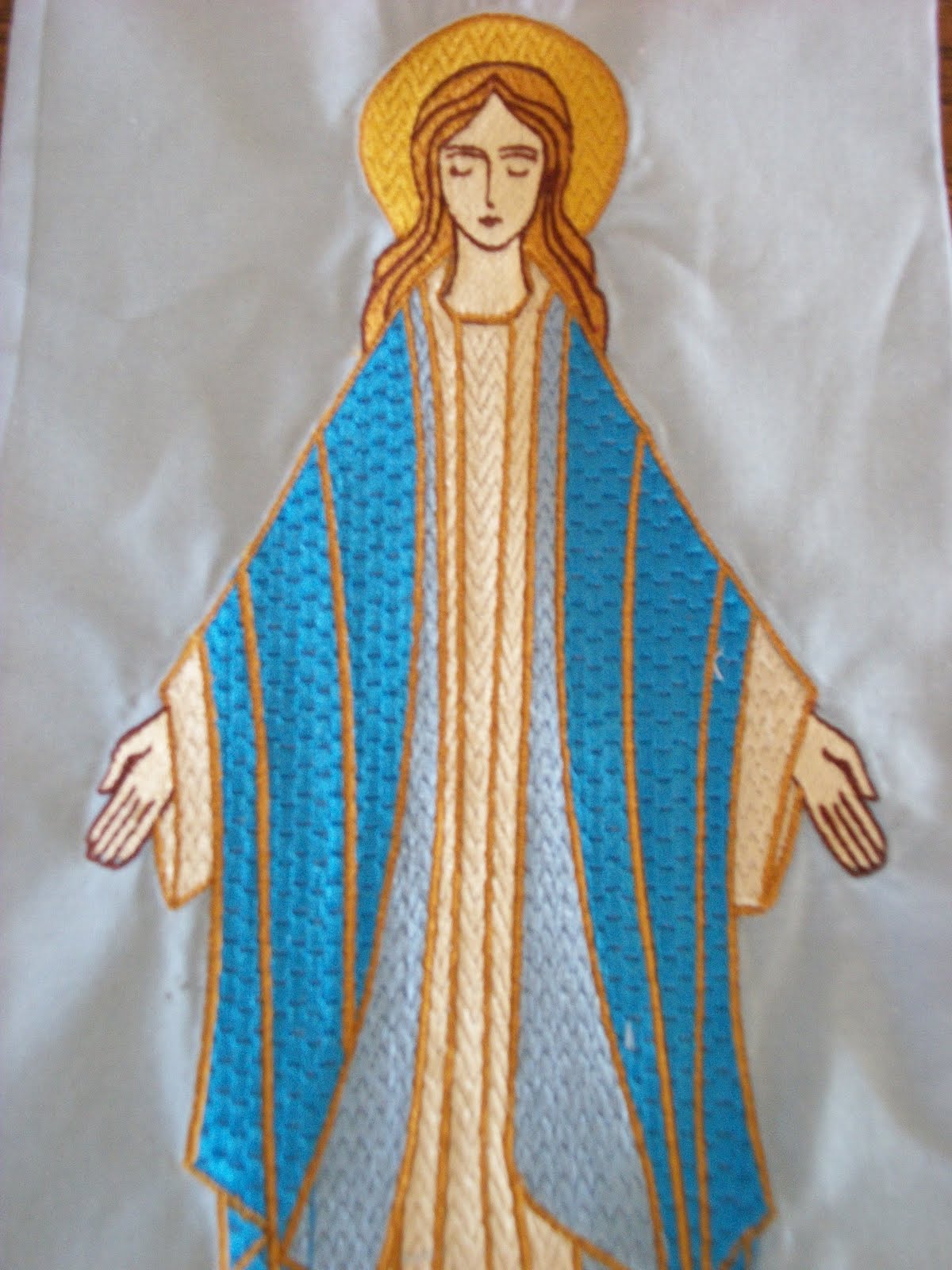
Stoll illustration (see image above) – My mother and grandmother hand-sewed this stoll for me. It is my most prized possession. It’s not entirely even, doesn’t always sit just right on my shoulders, but I love it. No amount of money could ever be offered for me to sell it. Now, it’s beautiful but its beauty is not simply self-contained but connects with a relationship, to those who it reminds me of, the ones who made it, who are its source. Its preciousness comes first and foremost from them not itself. This is what I believe the text is saying about your body as a source of praise. 

Why does such a distinction matter? It matters because this psalm isn’t some psychological pick me up aimed at bolstering your self esteem which can spiral into a sort of an obsessive desire to be perfect or to believe that our body is simply at our own whim or merely for our own self-satisfaction – the body becomes a task rather than a gift and becomes alienated from its purpose. No, this is not saying that a body should be praised because of how it looks or what it can do. Our bodies are not praiseworthy because they are cute or useful. If that were true then this text would be about babies and most Hollywood actors thereby relegating broken bodies, older bodies, distorted bodies, or even normal bodies to the margins of society.  When the body is all about us – we have lost our center. Your body is precious not because you are beautiful or thin, well-groomed with straight teeth, muscular, controlled, or sleek. Your body is precious because it is the Lord’s. This shouldn’t detract from your sense of wonder about yourself – you are wonderfully made – but vs. 14 says that the wonderfulness of your body comes from the Lord. This means that there is no such thing as any one body being more wonderful than any other for there is only One Lord who created all bodies.

Your body is wonderful and praiseworthy, make no mistake. It is complex, intricate, precise, amazing. And if your body doesn’t necessarily look just right, doesn’t actually feel alright, doesn’t possibly move as it should – good news. It’s still wonderful, still praiseworthy, it’s still God’s.  I love the the t.v. show Pawn Stars – where something that’s seemingly worthless becomes a treasure because of whose it was. It has to be authenticated, then there is the moment of tension and the expert renders his verdict – authentic or cheap knock off. You are not a cheap knock-off, you, my friend belong to God, you are authentically His. That’s why your body isn’t just about you. In vss. 13-15 – the “you” that’s spoken of that creates, weaves, is thanked, is wonderful, makes, and knows is not you but God – 7 x’s the “you” in our verses for today is God. 


But the Psalmist goes much further than to say that God made you. He tells us that God thinks about us actively. I was intrigued by the claim in vs. 18 that God’s thoughts for each one of us are more numerous than the “grains of sand” – Okay, time for a what I like to call a "google moment" – I discovered that the University of Hawaii took 1,000 hours to count over 1,000,000 grains of sand inside a bowl, then from that they estimated that there are 700,500,000,000,000,000,000 grains of sand on the earth (or seven quintillion five quadrillion grains of sand) 

What fascinates me though is that there are more atoms than this in your body, an estimated
7,000,000,000,000,000,000,000,000,000 (or
seven octillion – that’s a 7 with 27 zeros)
Now, if every grain of sand was a second that God thought about you that would mean that God would be thinking about each of you, your neighbor, your enemy, your child, for 22 trillion years (22,197,961,324,021.41 years to be exact). That is simply, well, wonderful.

Contentment: A Prayer

Be all that I need, O God, but never a fantasy.
Be all that I long for but not at my whim.
Be all that I've read but never all that I know.
Be all to me;
Be all for me;
Be all beyond me;
Be all apart from me.
Be all, O LORD, be all.